Festivals in Dhaka: The Complete Guide to the City's Celebrations
Mehran C
Every major festival in Dhaka, when it happens and where to be — from Shakrain's burning rooftops to Pohela Boishakh's dawn concert at Ramna Batamul.
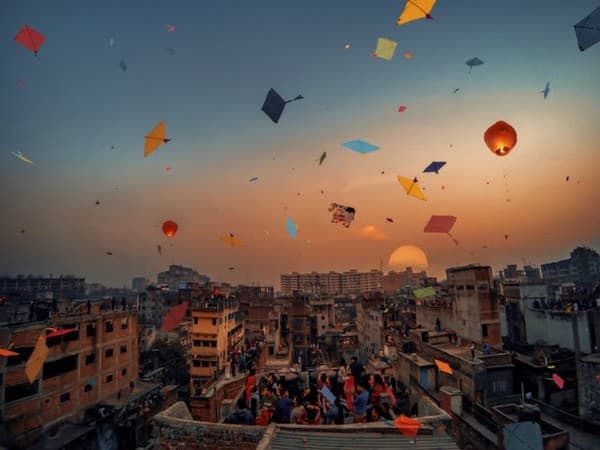
Dhaka does not do festivals quietly.
The city has a way of committing entirely — closing roads, emptying offices, dressing twenty million people in the same two colours on the same morning. Whatever else can be said about living here, nobody in Dhaka has to wonder whether something is happening.
What follows is the full map: what each festival actually is, when it falls, where to physically be, and what nobody tells you until you've already missed it.
Before the calendar: why the dates move
Three of Dhaka's festival traditions run on three different calendars, and they don't agree with each other.
Fixed national days follow the Gregorian calendar and never move — 21 February, 26 March, 16 December.
Bengali festivals follow the Bangabda calendar. Pohela Boishakh, Pohela Falgun, Nabanna and Shakrain land on the same Bengali date each year, which usually but not always maps to the same Gregorian one.
Islamic festivals follow the Hijri lunar calendar, which is about eleven days shorter than the solar year. This means Eid-ul-Fitr, Eid-ul-Adha, Ramadan and Ashura move eleven days earlier every year, drifting steadily backwards through the seasons across a roughly 33-year cycle. Any guide that gives you a fixed month for Eid is out of date the moment it's published.
So: read the fixed dates as fixed, and check the lunar ones each year.
The winter festivals — January and February
Shakrain (Ghuri Utsab) — 14 January
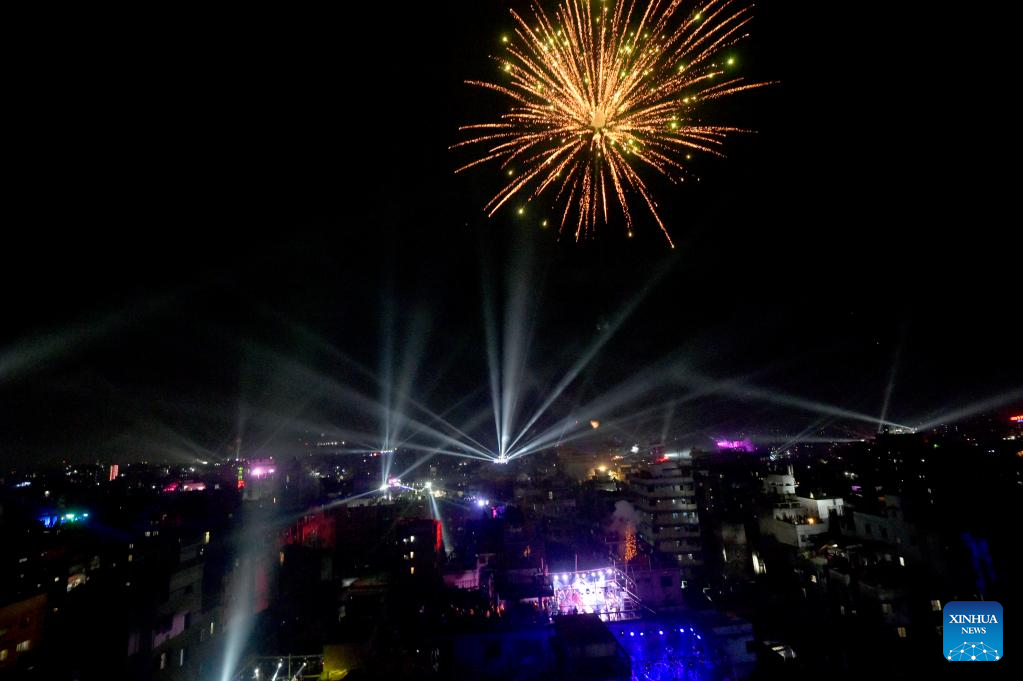
The last day of Poush, and the best free spectacle in the city.
Old Dhaka's rooftops — Shakhari Bazar, Tanti Bazar, Gendaria, Lakshmi Bazar — become contested airspace. Fighter kites with glass-coated line, cut loose and chased across the neighbourhood by kids on the ground. That's the daytime version.
After dark it changes character entirely: sound systems on every roof, fireworks, lanterns, and fire-breathing performed with an enthusiasm that would horrify a safety officer anywhere else on earth.
Where to be: any rooftop in Old Dhaka you can get invited onto. This is a hosted festival — the experience is fundamentally different from a roof than from the street, and Dhaka families are famously willing to adopt a curious visitor for an afternoon.
Bishwa Ijtema — January, Tongi
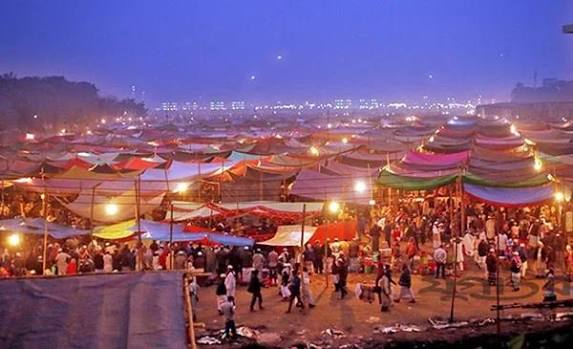
One of the largest Muslim congregations in the world, held on the banks of the Turag at Tongi, just north of Dhaka. It typically runs in phases to manage a crowd measured in the millions, ending with the Akheri Munajat, the final collective prayer.
Practical note for organisers: whatever else you have planned that week, check the Ijtema dates. Road access north of the city changes completely, and transport across Dhaka feels it.
Ekushey Book Fair — all of February
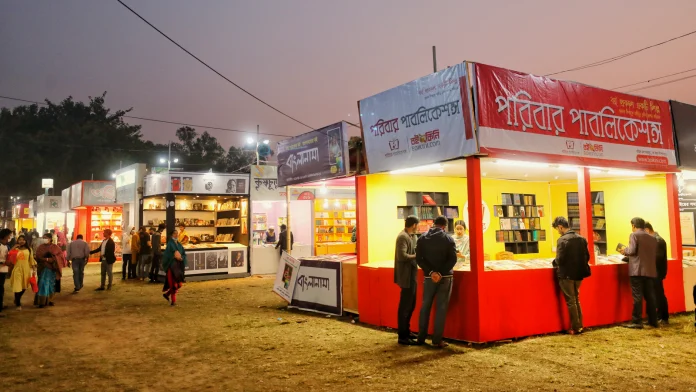
Amar Ekushey Grantha Mela runs the entire month across the Bangla Academy grounds and Suhrawardy Udyan, and describing it as a book fair does it a disservice. It's a month-long open-air cultural festival that happens to sell books — hundreds of publishers, nightly performances, food stalls, and a Friday crowd that runs into the hundreds of thousands.
It's also where the Bangla publishing industry does its year. New titles are timed to it the way films are timed to a festival circuit.
When to go: weekday evenings if you want to actually browse. Fridays if you want the atmosphere and don't mind being carried along by the crowd.
Shaheed Dibas / International Mother Language Day — 21 February
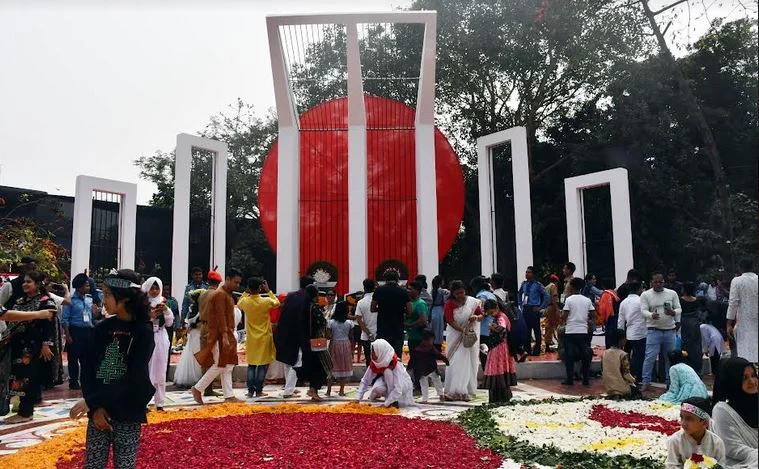
Not a festival in the celebratory sense, and the most important day in the calendar.
It commemorates the students killed in 1952 for demanding recognition of Bangla as a state language — a movement that eventually led to the country's independence, and which UNESCO adopted as the basis for International Mother Language Day worldwide.
At midnight the city begins walking, barefoot, to the Central Shaheed Minar, carrying flowers, singing Amar Bhaier Rokte Rangano. The procession continues through the night and into the morning.
If you experience one thing in Dhaka that explains Bangladesh to you, it is this. Go, and go quietly.
Pohela Falgun — mid-February
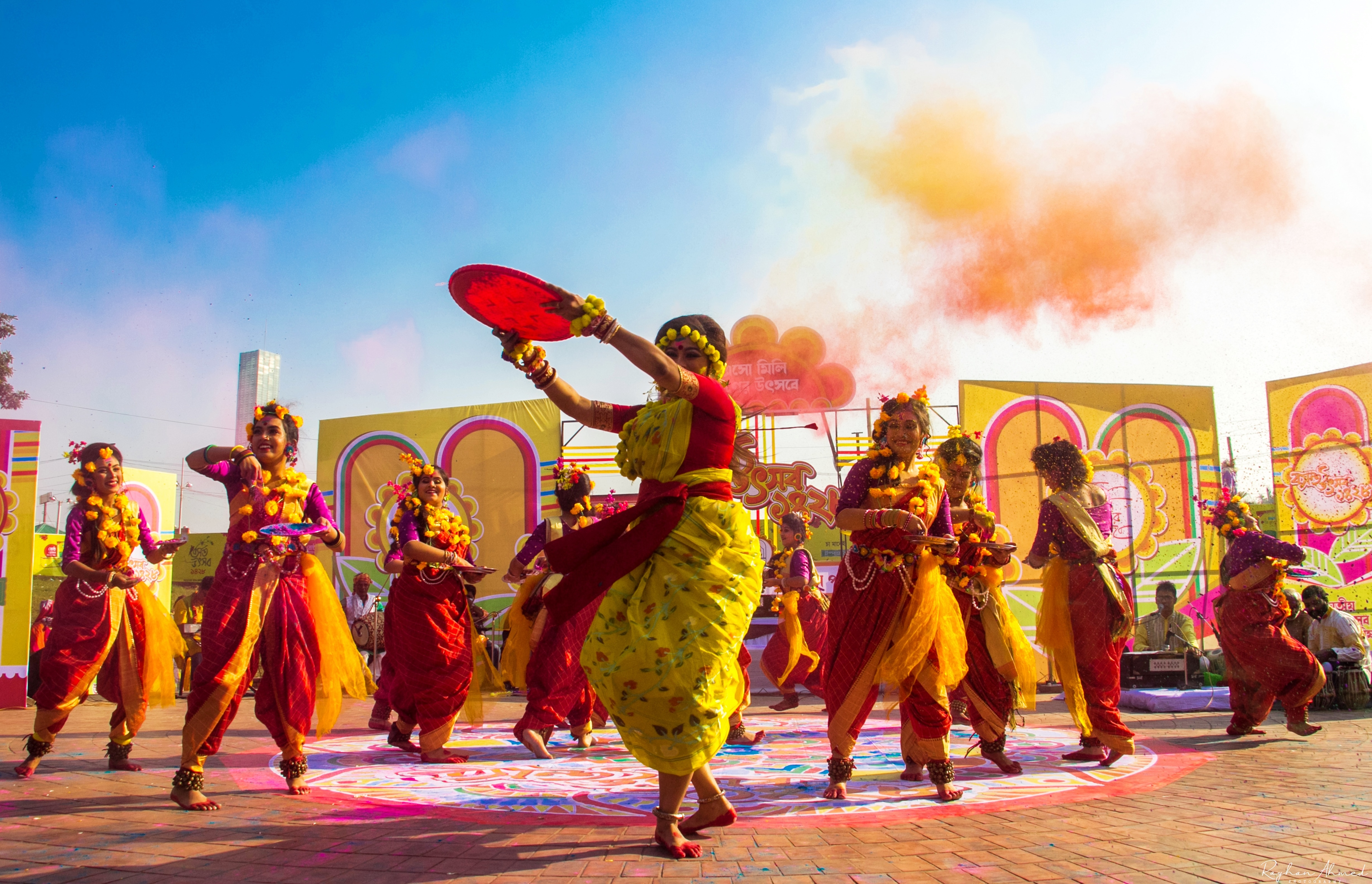
The first day of the Bengali spring, and the point at which the city collectively decides winter is over. Yellow saris, marigolds in hair, campus concerts, and a Dhaka University area that becomes essentially impassable and entirely worth it.
In recent years it has fallen alongside Valentine's Day, which has doubled the crowds and roughly tripled the flower prices.
Spring — the biggest day of the year
Pohela Boishakh — 14 April
Bengali New Year. If Dhaka has one day that belongs to everyone regardless of religion or background, this is it.
The dawn: Chhayanaut has opened the year with a sunrise concert at Ramna Batamul, under the banyan tree, for over half a century. It starts before six. People arrive in the dark.
The procession: the Mangal Shobhajatra sets out from the Faculty of Fine Arts at Dhaka University — enormous papier-mâché animals, masks, drums, colour on a scale that takes students weeks to build. UNESCO inscribed it on the Representative List of the Intangible Cultural Heritage of Humanity in 2016.
The food: panta bhat — fermented rice — with fried ilish, green chilli and onion. Eaten by people who would not otherwise eat it any other day of the year.
The dress code: red and white. It is not optional in any social sense.
Programme names, routes and organising details shift from year to year, so check the current year's announcements. The shape of the day, however, has held for generations. Shilpakala Academy typically runs a multi-day folk festival alongside it — dhak, lathi khela, jari, sari, gombhira, bhawaiya, jatrapala.
Rabindra Jayanti and Nazrul Jayanti — May
The birthdays of Rabindranath Tagore (25 Baishakh, usually around 8 May) and Kazi Nazrul Islam (11 Jaistha, usually around 25 May), Bangladesh's national poet. Music, recitation and stage programmes fill Shilpakala Academy, Bangla Academy, the National Museum auditorium and effectively every school in the city.
Quiet, high-quality, genuinely lovely, and almost entirely ignored by visitors.
The lunar festivals — Eid
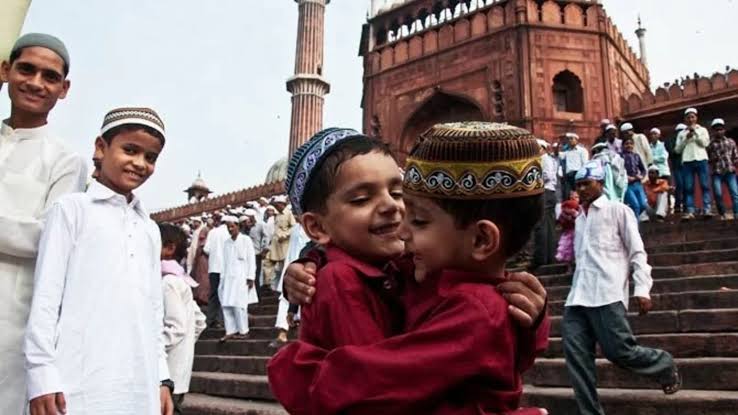
Eid-ul-Fitr, at the close of Ramadan, and Eid-ul-Adha, roughly two months later, are the two largest holidays in Bangladesh — and the two strangest weeks in Dhaka.
Because several million residents leave the city for their ancestral districts, Dhaka empties. The traffic vanishes. Streets that are permanently gridlocked become quiet enough to walk down the middle of. For anyone who lives here, it is the only chance to see the city's actual architecture.
Chand Raat, the night before Eid, is its own event: markets open until dawn, mehndi stalls on every corner, and shopping conducted with a fervour that has to be seen.
For organisers, the Eid fortnight is a genuine dead zone for public events — and, increasingly, the peak window for online ones, because everyone is at home in their district with a phone.
Autumn — Durga Puja
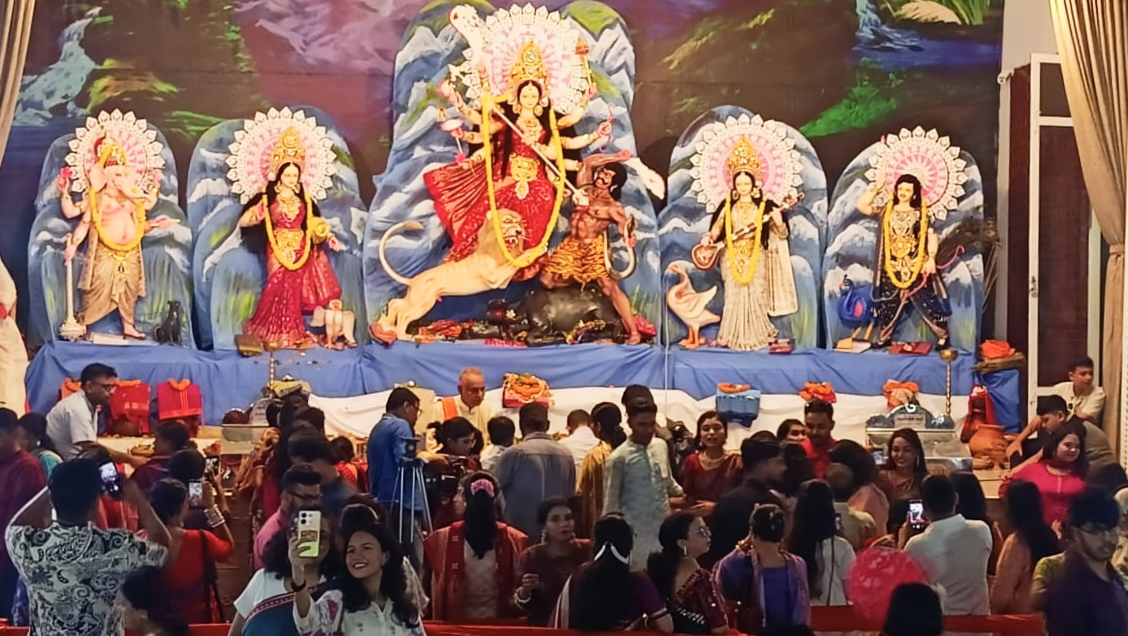
September or October, five days
The Hindu community's largest festival, and a full transformation of specific neighbourhoods.
Dhakeshwari National Temple is the centre. Around it, the lanes of Old Dhaka — Shakhari Bazar above all — fill with pandals, each one a temporary architectural work built and dismantled inside a week. Drums, lights, food, all-night crowds. Ramkrishna Mission runs its own major programme.
It ends with bisarjan — the immersion processions carrying the idols down to the Buriganga.
It's open to everyone, and Shakhari Bazar during Puja is one of the great walking experiences available anywhere in South Asia.
Late autumn and winter — harvest and remembrance
Nabanna Utsab — mid-November
The harvest festival, on the first day of the Bengali month Agrahayan. Folk music, pithas, and food fairs — celebrated most visibly around Dhaka University and the cultural institutions rather than out in the neighbourhoods.
Victory Day — 16 December
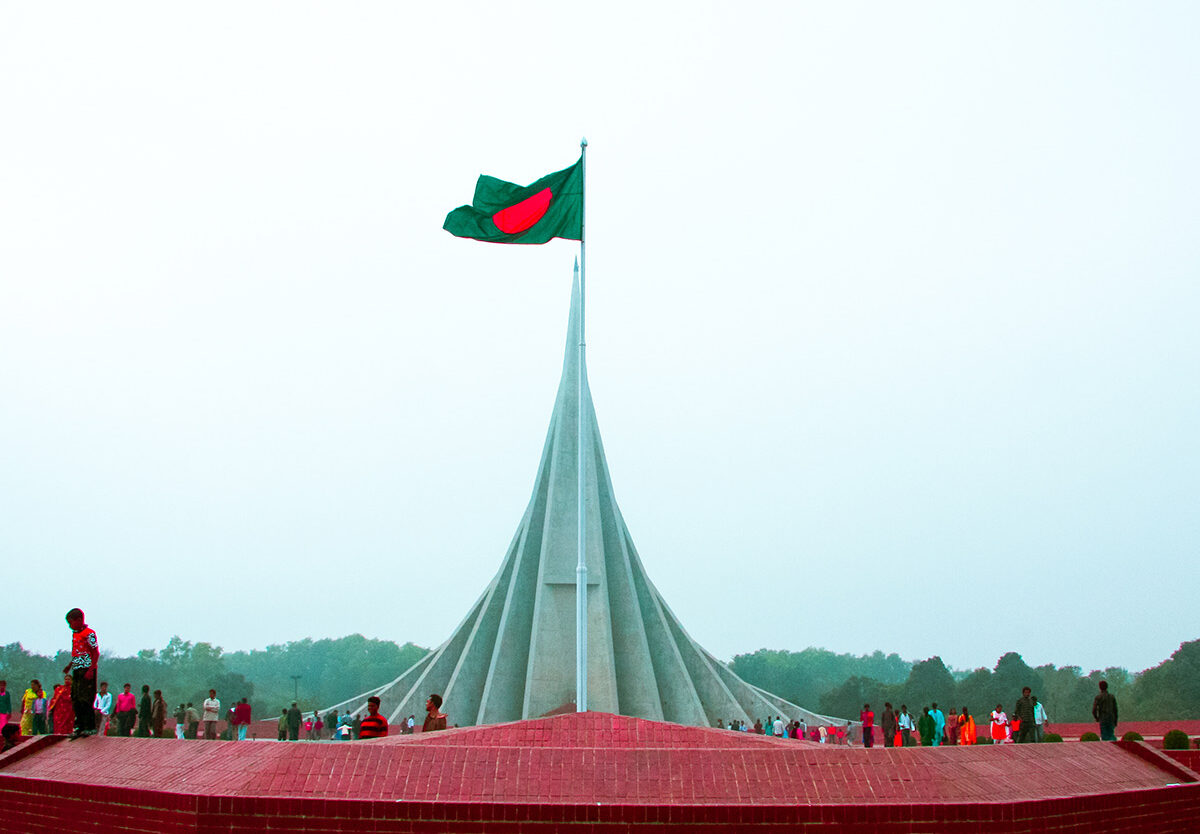
Marking the end of the 1971 Liberation War. Parades, cultural programmes across every institution, and a city dressed in red and green.
Independence Day — 26 March
The other half of the pair, marking the declaration of independence. Similar shape: national ceremony, institutional programmes, a busy schedule at the National Theatre Hall.
The recurring arts festivals
Beyond the seasonal calendar, Dhaka runs a serious circuit of programmed festivals. Dates and frequency shift, so treat these as things to watch for rather than diary entries:
- Dhaka International Film Festival — the country's oldest, running since 1992, organised by the Rainbow Film Society. Usually January.
- Dhaka Lit Fest — the literary festival on the Bangla Academy grounds.
- Dhaka Art Summit — a biennial that briefly relocates a slice of the international art world to Shilpakala Academy.
- Chobi Mela — the international photography festival built around Drik and Pathshala, and a genuine fixture on the world photography calendar.
- Dhaka International Trade Fair — January, at the Purbachal exhibition grounds. Commercial rather than cultural, and enormous.
- Hridoye Dhaka — the city corporation's Dhaka Day programme around 1 August, marking the capital's founding, with a shobhajatra, carnival, heritage walk, boat race, kite festival and Old Dhaka food festival.
Planning around the festival calendar
If you're organising anything in Dhaka, the festival calendar isn't background — it's your competition for attention.
Don't compete with the giants. Pohela Boishakh, the first weekend of the book fair, the Eid fortnight and 21 February will beat you. Not because your event is worse, but because the entire city is already committed.
Do use the shoulders. The week after a major festival is consistently underrated. People are still in a social mood, and every other organiser has cleared out.
November to February is the window. Good weather and full cultural volume. It's also when venues price highest and book earliest — start looking three months out, not three weeks.
Watch the lunar drift. If you run an annual event, the Eid dates shifted eleven days earlier than last year. The date that worked last year may not this year.
Common questions
What is the biggest festival in Dhaka? Pohela Boishakh on 14 April is the largest secular, citywide celebration. Eid-ul-Fitr is the largest religious holiday. The Ekushey Book Fair is the longest-running, at a full month.
Can visitors attend festivals in Dhaka? Yes — essentially all of them. Dhaka's festivals are public and famously welcoming. Durga Puja pandals, the book fair, Pohela Boishakh and Shakrain are all open, free and better with a local along.
What should I wear to a festival in Dhaka? Red and white for Pohela Boishakh, yellow for Pohela Falgun. Modest dress generally, and something you don't mind losing to a crowd. Shoes you can walk several kilometres in.
When is the best time to visit Dhaka for festivals? Mid-January to mid-February gets you Shakrain, the book fair, Pohela Falgun and Shaheed Dibas in one trip, in the year's best weather. Mid-April gets you Pohela Boishakh alone, in considerable heat.
Festivals are the skeleton of Dhaka's year — the rest of it fills in week by week. See what's happening in Dhaka right now, or join a community and let the city's calendar find you.